Every board we make uses materials that come from somewhere. So with every board, we ask the same question: how can this be kinder to the planet? We keep looking for ways to make our products more eco-friendly and to lower our carbon footprint, and this is where we are today.
- Writing boards
- Core of 100% recycled paper
- Notice boards
- Wood fibre core, no glue
- End of life
- Biodegradable and recyclable
Why we care
Forests are being cleared faster than they can grow back, and our climate is feeling it. As a manufacturer, the materials we choose have a real effect, and so do the products our customers choose.
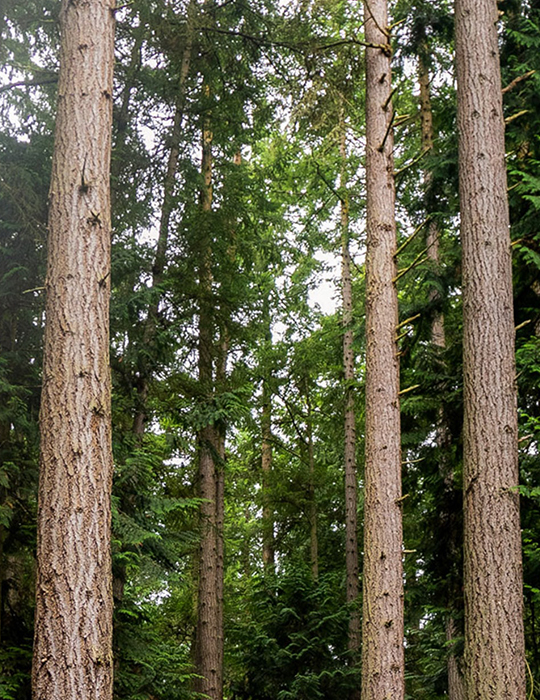
A single tree absorbs about 21 kg of carbon dioxide a year and produces about 117 kg of oxygen. Every board that doesn’t need fresh timber helps keep more of them standing. We see it as our responsibility to lead by example: make the greener choice the normal one, so our customers don’t have to think twice about it.
What makes a board eco-friendly?
A whiteboard or notice board is mostly hidden from view. The surface you write on is only a thin layer; behind it sits a core that gives the board its shape and strength. Four things decide how green a board really is:
- What the core is made of – recycled or natural material, or fresh timber.
- What holds the core together – many wood panels rely on synthetic glues; a core that needs none is cleaner to make and to dispose of.
- How long the surface lasts – a board that has to be replaced every few years creates more waste than one that lasts.
- What happens at the end of its life – whether the materials can be recycled or will break down naturally.
These are the four questions we use when we choose materials. Here is how our boards answer them.
What we’ve changed so far
The biggest part of any board is the part you never see: the core behind the surface. That’s where we started.
Writing boards: recycled paper instead of plywood
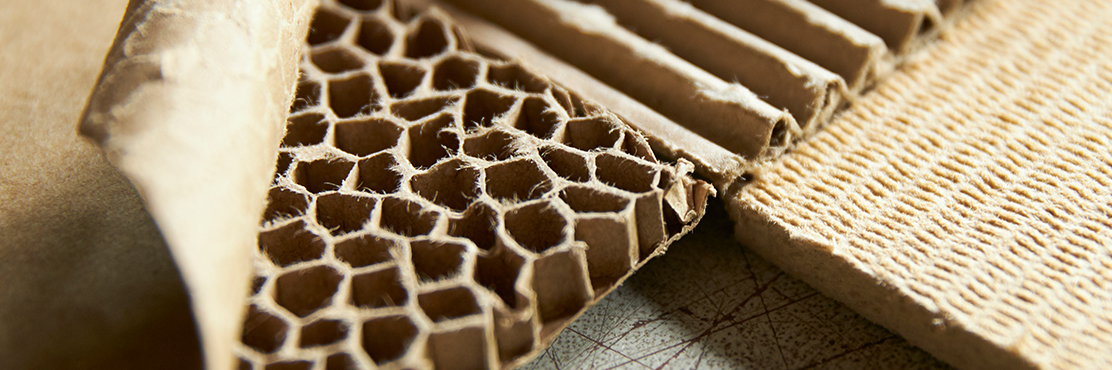
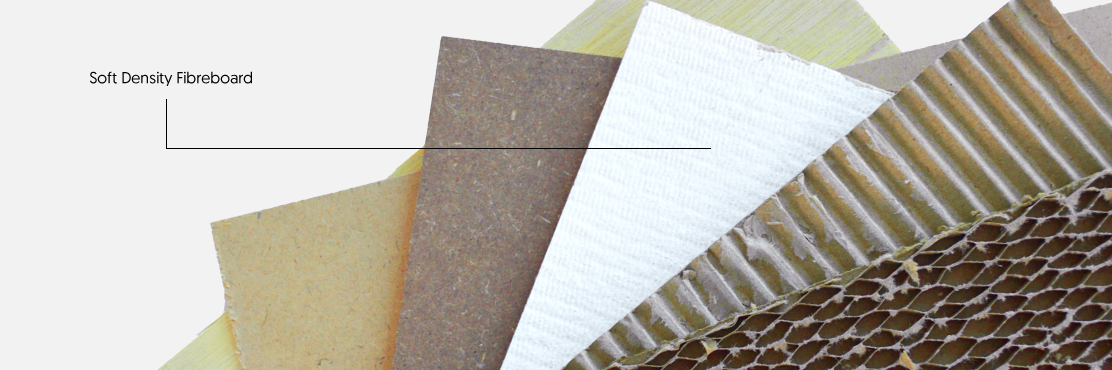
Most WriteBest writing boards are built on honeycomb board instead of plywood. It’s made of 100% recycled paper, so no new trees are cut for the core. The paper is formed into hollow six-sided cells, the same shape bees use, which is why honeycomb board is also used in construction for partition walls, doors and furniture: it is strong for very little material.
Because the cells are hollow, the board is also lighter. That makes it easier to move and install, and it means less weight on every delivery truck.


Curious how a paper core can be this strong? Read Honeycomb core: the recycled paper inside our whiteboards.
Notice boards: wood fibre without glue
Our notice boards are built in layers: the pinning surface, a soft fibreboard core and a hardboard back. The core lets a pin glide in smoothly and hold your memo securely, and it’s made the cleanest way we know.
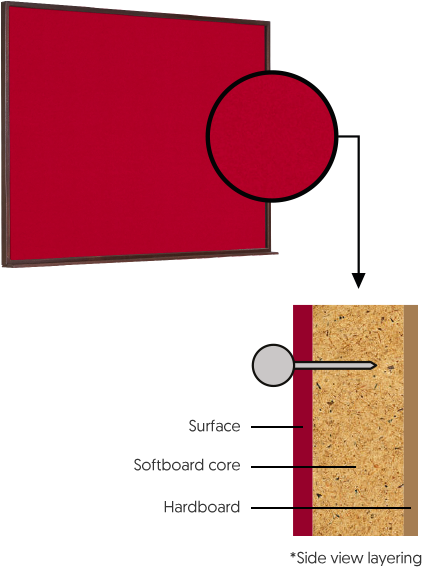


The fibreboard meets the Forest Stewardship Council’s (FSC) requirements for environmentally appropriate products.
Surfaces: built to last, then recycled
The greenest board is one you don’t have to replace. Our e³ CeramicSteel surface comes with a 25-year surface warranty, and it’s Cradle to Cradle Certified™ Bronze, 99.9% recyclable and releases no VOCs. More about e³ CeramicSteel.
How our cores compare
Here is how the two cores inside our boards compare with plywood, the solid wood panel commonly used as a board core.
| Honeycomb boardour writing boards | Soft density fibreboardour notice boards | Plywoodfor comparison | |
|---|---|---|---|
| Made from | 100% recycled paper | Natural wood fibre | Thin layers of fresh timber |
| Held together by | Its own cell structure | The wood’s natural resins, no glue | Adhesive between every layer |
| Weight | Light (hollow cells) | Light and soft, for pinning | Heavy (solid) |
| End of life | Biodegradable and recyclable | Biodegradable and recyclable | The glue makes it harder to recycle |
Make it last: the greenest board is the one you keep
Even the best materials only pay off if the board stays in use. A few simple habits add years to any board, and they cost far less than a replacement.
- Choose the right surface for the job – a room that uses its board all day needs a harder-wearing surface than a meeting room that uses it once a week. Our guide to the six whiteboard surfaces helps you choose.
- Clean it properly – a dedicated whiteboard cleaner removes marker stains and ghosting and improves the life of the writing surface.
- Renew instead of replacing – when a writing surface is worn, our white and green board film can renew it, so the board itself keeps working.
- Waste less on the small things – our peel-off eraser has 10 layers: when one gets dirty, peel it off for a clean surface, up to 10 uses from one eraser.
Still improving
We don’t see this as finished. We keep reviewing our materials and the way we make our boards to lower our carbon footprint further, and we’ll share what changes here.
See the boards built this way: our writing boards and notice boards.
Frequently asked questions
Are WriteBest whiteboards eco-friendly?
Yes. Most WriteBest writing boards are built on honeycomb board made from 100% recycled paper instead of plywood, so no new trees are cut for the core, and the core is biodegradable. Our e³ CeramicSteel surface is Cradle to Cradle Certified™ Bronze, 99.9% recyclable and releases no VOCs.
What is inside a WriteBest whiteboard?
A writing surface on top of a core. In most of our writing boards the core is honeycomb board: recycled paper formed into hollow six-sided cells, which keeps the board strong and light.
Are WriteBest notice boards made with glue?
No glue or other chemicals go into the soft density fibreboard core of our notice boards. The natural resins in the wood hold the fibres together, and the fibreboard meets the Forest Stewardship Council’s (FSC) requirements.
Can an old whiteboard or notice board be recycled?
The honeycomb and fibreboard cores we use are biodegradable and recyclable, and e³ CeramicSteel is 99.9% recyclable. Before you replace a board, check whether the surface can be renewed with board film instead.
Why does a lighter board help the environment?
A lighter board means less weight to transport on every delivery, and it is easier to move and install. Our honeycomb core is light because its cells are hollow, while still taking more pressure than a standard solid core.
Where are WriteBest boards made?
WriteBest is a Malaysian manufacturer with 35 years of experience. Our head office and 250,000 sq ft manufacturing plant are in Hulu Langat, Selangor, with branches in Johor Bahru, Kota Kinabalu and Sibu.